

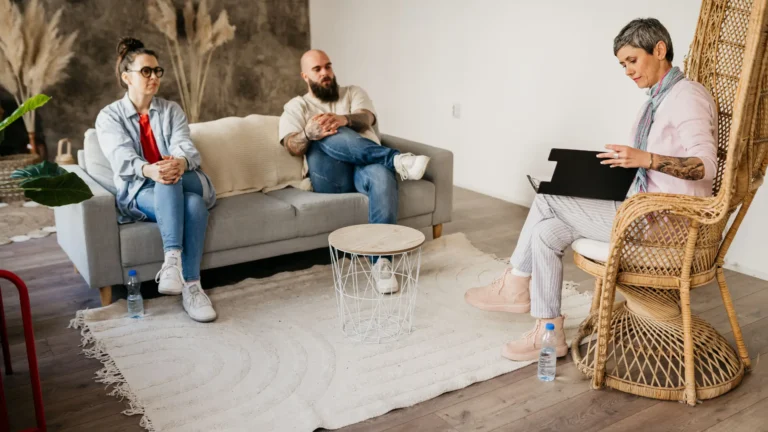
You’re not screaming at each other every night. You’re not on the verge of divorce. But something’s off, and you both know it. The same argument keeps coming up. You stop mid-sentence because you already know how it ends. The closeness you used to feel has been replaced by something quieter and harder to name.
What’s going on? And more importantly, is there a way out of this pattern?
Couples therapy isn’t just for relationships in crisis. It’s for couples like yours, where things aren’t falling apart but aren’t working the way they should.
Knowing how the process works changes everything. It’s the difference between writing it off and giving it a fair shot.
Why Do the Same Arguments Keep Happening?
The argument about dishes isn’t about dishes. The money fight isn’t really about money. It’s about something deeper. Underneath the argument is usually something neither person knows how to say: a need that isn’t being met, a fear that isn’t being named.
Think about the last argument you had. How quickly did it escalate? How similar did it feel to arguments you’ve had before? That’s not a coincidence. Most couples fall into the same patterns without even realizing it. And once you’re inside one of those cycles, it’s almost impossible to break out on your own.
One partner pushes for connection. The other pulls back to avoid conflict. The more one pushes, the more the other retreats: the more one retreats, the more the other pushes. Neither person is the villain. But both people are stuck.
This is exactly where couples start. A skilled therapist helps you see the cycle you’re in, name what’s underneath it, and slowly begin to change it.
What Actually Happens in a Couples Therapy Session?
A lot of people picture couples therapy as two people arguing while a therapist takes notes. That’s not it.
Effective therapy slows things down. It creates enough space for both of you to actually hear each other, sometimes for the first time in a long time. Your therapist isn’t there to referee or decide who’s right. They’re there to help you understand what’s happening beneath the surface of your conflicts.
Here’s what a typical process looks like:
- First session: Your therapist gets to know both of you. They hear your concerns, ask about your history, and start forming a picture of your relationship’s patterns.
- Early sessions: The first few sessions aren’t about deciding who’s wrong. They’re about getting a clear picture of the dynamic you’ve both been stuck in.
- Middle sessions: This is where deeper work happens. You start having different kinds of conversations, ones where both people feel safer being honest.
- Later sessions: You practice new ways of communicating and connecting outside the therapy room. You start applying what you’ve learned.
At Hope Matters Institute, some common topics that come up in family couples therapy include recurring conflict, trust issues, emotional distance, life transitions, and communication breakdowns.
Does Couples Therapy Actually Work? Here’s What the Research Shows
It’s fair to wonder whether therapy produces real change or just gives you a place to vent for an hour each week. The research has a clear answer.
Spengler, Lee, Wiebe, and Wittenborn conducted the first-ever comprehensive meta-analysis of Emotionally Focused Couple Therapy (EFT). They pulled data from over 20 studies involving hundreds of couples.
The goal was to find out if EFT actually improved relationship satisfaction across different couples, settings, and therapists.
The results were striking: roughly 70 percent of couples who completed EFT reported feeling symptom-free by the end of treatment, with those gains holding steady for up to two years after therapy ended.
Seventy percent. That’s not a modest improvement. Most couples feel fundamentally different about their relationship after couples therapy.
What makes this research particularly useful is that it wasn’t limited to couples in severe crisis. It included couples at various levels of distress, which means the findings are relevant to you even if things aren’t at a breaking point.
What Makes the Gottman Method So Effective for Recurring Conflict?
Couples dealing with the same recurring fights tend to benefit especially well from structured, research-backed approaches. One of the most widely studied is the Gottman Method.
Maryam Davoodvandi and colleagues worked with different couples experiencing marital distress. They randomly assigned participants to either a Gottman Method therapy group or a control group.
The treatment group received ten 45-minute sessions grounded in Gottman’s Sound Relationship House model. Researchers measured both marital adjustment and emotional intimacy before, immediately after, and at one-month follow-up using standardized assessment tools. Results showed significant improvements in marital adjustment and couples’ intimacy in the therapy group (p = 0.001), with those gains lasting through the follow-up period.
The Gottman Method targets:
- How arguments start and whether they escalate or de-escalate
- How well partners turn toward each other in small, everyday moments
- Whether there’s enough positive connection to counterbalance the conflict
- Whether both people feel known by their partner on a deeper level
These aren’t abstract concepts. They’re specific, measurable things a therapist can help you work on systematically. That’s what makes evidence-based approaches like cognitive behavioral therapy and the Gottman Method different from general conversation.
Is Couples Therapy Online as Effective as Meeting In Person?
This is usually the question holding people back. Life is busy. Schedules don’t align. A commute feels like too much. And then there’s the lingering doubt: can therapy through a screen really do what in-person therapy does?
Kysely, Bishop, Kane, and their research team answered this question directly. They recruited 30 couples experiencing relationship distress and randomly assigned them to either face-to-face sessions or videoconferencing. All couples received the same behavioral therapy program over six sessions. Researchers tracked relationship satisfaction, mental health outcomes, and therapeutic alliance quality at multiple points throughout treatment. The results showed no meaningful differences between the two groups.
What drives change is a skilled therapist, a structured approach, and consistent attendance. When those three things are in place, whether you’re sitting in an office or logging in from your living room becomes largely irrelevant.
At Hope Matters Institute, we offer couples therapy online across California through secure video sessions. For couples juggling demanding schedules, childcare, or long commutes, this removes the last practical barrier to getting started.
How Does Online Couples Therapy Work Step by Step?
If you’ve never done therapy before, the logistics can feel unclear. Here’s what the process typically looks like:
- Free consultation: We offer a free 15-minute call where you can talk about what’s going on, ask questions, and verify your insurance coverage. No commitment required.
- Matching with a therapist: You’re paired with a therapist whose training and approach fit your specific situation.
- Scheduling: Sessions happen on a secure video platform at times that work for both of you. Evening and flexible slots are available.
- The sessions themselves: Each session has a direction. Your therapist guides the conversation in a way that keeps you moving forward, not in circles.
- Between sessions: You’ll often have small things to practice or notice in your day-to-day interactions. Change happens outside the therapy room, too.
Frequently Asked Questions
- What is couples therapy, and who is it for?
Couples therapy is a type of psychotherapy where a licensed therapist helps two partners understand their patterns, communicate better, and work through conflict. It’s not just for couples in crisis. If you feel a sense of disconnection, therapy can help you.
- How does couples therapy work exactly?
Your therapist helps you spot the patterns driving your conflict, understand what’s underneath them, and practice communicating differently. Each session builds on the one before it.
- How long does couples therapy take to show results?
Most couples notice meaningful shifts within the first four to six sessions, with bigger changes happening over 12 to 20. A lot depends on how long the issues have been building.
- Is family therapy online as effective as in-person therapy?
Yes. Research consistently shows online couples therapy produces outcomes comparable to in-person sessions, and many couples find it easier to attend consistently, which itself improves results.
- What’s the difference between couples therapy and marriage counseling therapy?
The terms are often used interchangeably. Marriage counseling tends to refer specifically to married partners, while couples therapy applies to any committed relationship.
- What if my partner doesn’t want to come to couples therapy?
You can still make progress on your own. Individual therapy lets you work through your role in the dynamic, and that shift often ripples into the relationship.
- Do I need to feel motivated before starting?
You and your partner join a secure video call with your therapist at a scheduled time, usually 50 to 60 minutes. Your therapist will walk you through everything before your first session.
- What types of issues does couples therapy address?
It covers recurring conflict, communication breakdown, emotional distance, trust repair, life transitions, parenting disagreements, and infidelity. It’s also effective for couples who aren’t in crisis but want to build something stronger.
- Does Hope Matters Institute accept insurance for couples therapy?
Yes, Hope Matters Institute accepts most major insurance plans, some of which include Aetna, Blue Shield of California, Cigna, Optum, and Medicare. We verify coverage during your free 15-minute consultation, so there are no surprises.
Your Relationship Deserves More Than Another Stalemate
The cycle you’re in right now didn’t build overnight, and it won’t break without the right support.
But it can break.
Couples who commit to the work don’t just stop fighting. It changes what the relationship is.